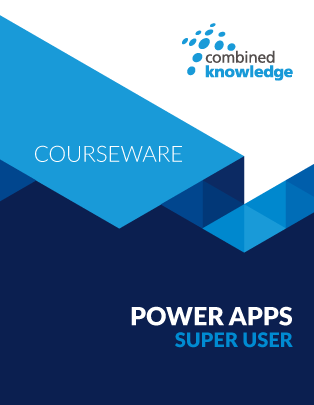
Microsoft Power Apps Super User Courseware (55265AC)
This beginner-friendly Power Apps Super User course is designed for anyone who want to build practical business apps without needing a programming background in Microsoft 365. Students will learn what Power Apps is, when to use it, how licensing affects app decisions, and how canvas apps, model-driven apps, and Power Pages fit into the broader Microsoft Power Platform.
Through hands-on labs, students will create and customize apps, work with controls, formulas, branding, media, data sources, mobile access, Teams and SharePoint integration, and basic app administration. By the end of the course, students will be able to build, test, publish, share, maintain, and reuse Power Apps that help solve common business problems and improve everyday workflows.
Benefits
- Understand when to use Power Apps
- Describe the components of Power Apps and their correct use
- Create Power Apps from existing data sources
- Brand Power Apps
- Customise Power Apps beyond just using the automated wizards
- Connect to a range of data sources from Excel to Azure SQL
- Understand the difference between canvas apps and model-driven apps
- Intergrate Power Apps with other Microsoft 365 systems – including Teams and SharePoint Online
- Administer and Maintain Power Apps
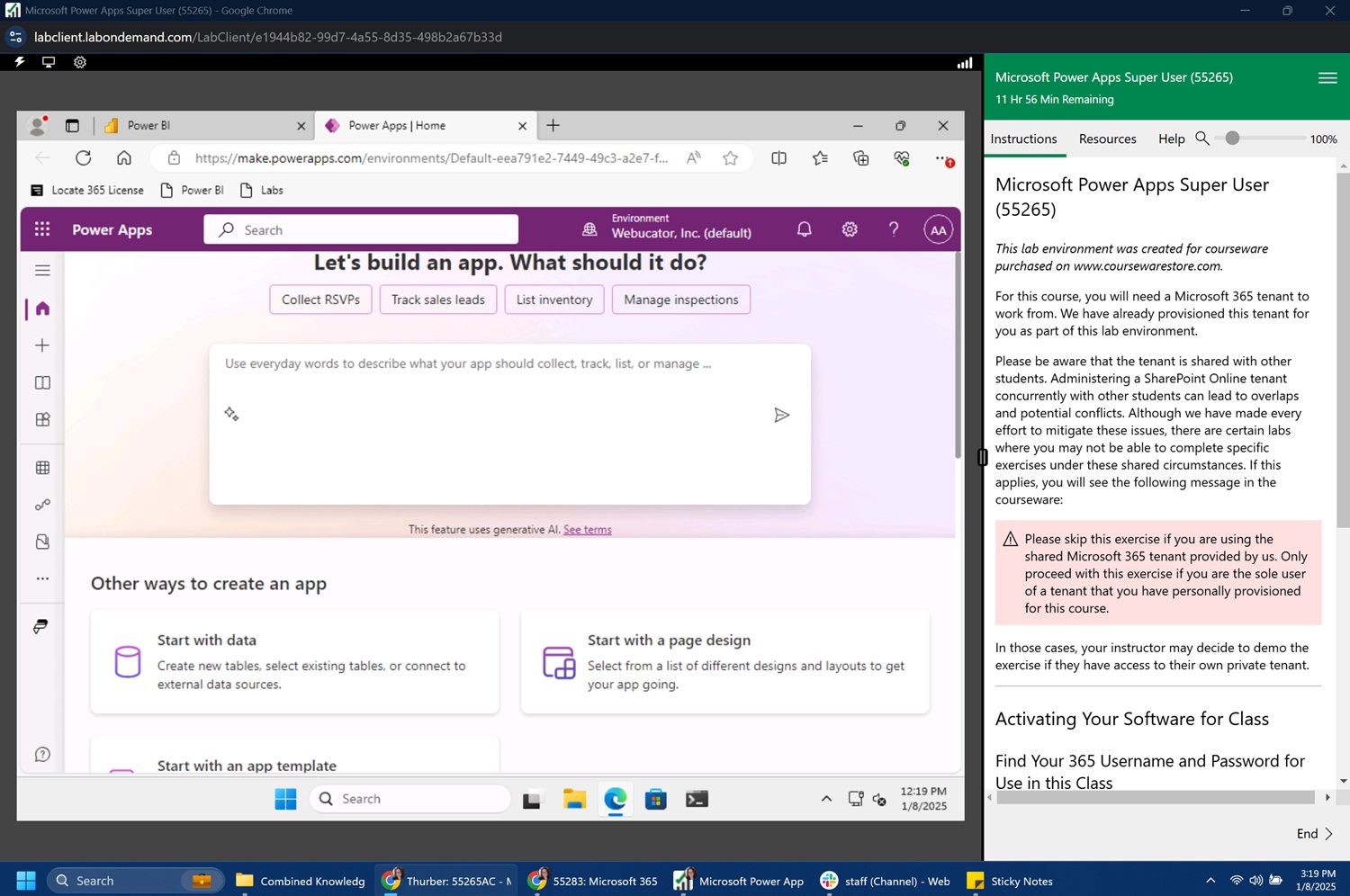
Full Lab Environment Add-On
Enhance and simplify your classes by providing an unparalleled learning platform that requires no setup. Your trainers and students can dive straight into a fully-prepared lab environment with just a click. This seamless integration means no time wasted on installations or configurations, allowing trainers and students to focus solely on the task at hand. The lab comes pre-loaded with all the necessary tools and resources, ensuring a smooth, hassle-free learning experience.
Outline
Module 1: Introduction to Power Apps
Let’s get started with an introduction to Microsoft Power Apps. Traditionally building customized solutions for a business involved using a coding language to build an application from scratch. Typically, these solutions could often only be used within the business, making external use of the application a large hurdle to overcome. With Power Apps we can now not only easily build solutions, but we can also share them with users in our business. Deployment takes seconds and you could by testing your own app on your phone in no time. This module will overview the features of Power Apps, its benefits to a business and the variety of ways you can build and access your apps on different devices.
Lessons
- What is Power Apps?
- The benefits of using Power Apps
- Power Apps components
- Canvas apps, model-driven apps, and Power Pages
- Power Apps licensing
- Power Apps templates
Lab A: Explore Power Apps templates
- Try the Power Apps Training for Office template
- Review the app in design mode
- Create a SharePoint Team site
- Describe when Power Apps should be used
- Know how to access Power Apps
- Make design decisions based on Power Apps licenses
- Understand that there are two type of app
Module 2: Getting started
To begin our journey through the Power Apps product, we will begin by looking at some of the templates that are available to view and edit. Microsoft’s templates are a good starting point to discover what the product is capable off and how it can be achieved. We will also take the chance to have a tour of the editor so that students are familiar with the interface that they will be using over the two-day course. This will include exploring how Copilot can help give you a starting point when creating apps. We will then build our first app from a static data source, showing students how to test their changes in the app instantly without the need to publish. We will also discuss how to configure your apps settings and how to access the app once it has been saved and shared.
Lessons
- How to create an app
- Power Apps Studio
- Add, edit, and remove controls and screens
- Formulas using Power Fx
- Testing an app
- App settings
- Save, publish, and share apps
- Version history and restore
- Power Apps mobile app
Lab B: Visitor parking log app
- Create a data source
- Create an app from a data source
- Customize an app
- Publish and share
- View on mobile app
- Build a useful app using wizards in minutes
- Start an app with Copilot
- Make simple changes to existing apps
- Know how formulas are used in Power Apps
- Be able to test an app before it is shared
- Restore a previous version of an app in the event of a problem
- Use the mobile app to consume an app
Module 3: Branding and Media
In our next module, we will look at the options available to designers that allow them to implement their business branding. Not only will this deal with the aesthetics of your app, it will also introduce time-saving tips to help keep your branding consistent. We will also be discussing how to embed media into your app which can be useful if you are planning on an app that might promote video content.
Lessons
- Branding
- Media
Lab C: Branding and Media
- Build the home screen
- Build a learning screen template
- Set up a product learning page
- Publish the app
- Customize apps backgrounds with images and color
- Add images and logos to an app
- Use times to show and hide controls
- Align and size controls
Module 4: Controls in Power Apps
So far in the course, we would have covered the basics of adding, editing and removing controls from our applications. The drive behind this module is to provide more depth on the categories of controls which can be used on a form. Your instructor will take you through each control and discuss its purpose and configuration. Tackling the wide selection of controls will help students recognize when to use the right control.
Lessons
- Text controls
- Input controls
- Media controls
- Form controls
- Data table controls
- Gallery controls
- Chart controls
- Using variables with controls
Lab D: Retail Barcode Scanner app
- Set up your data source
- Create an app from a data source
- Work in a responsive app
- Try the scanner on your phone
- Use a wide range of controls to give users the best data entry experience
- Edit control properties
- Use formulas to all multiple controls to interact with each other
- Present information using charts
Module 5: Data sources and logic
To help maintain and view essential business information, organizations often have a diverse selection of locations to keep different types of data. This could range from databases to file storage locations. Power Apps offers connections to a wide selection of data sources. We will show students to build their Power Apps to bring in data from a variety of sources as well as how they can utilize the common data source, a storage location unique to Power Apps.
Lessons
- Adding data sources
- Connection types
- Decide which data source to use
- On-premises data gateways
- What is delegation?
Lab E: Translation app
- Create a blank app
- Design a translation app
- Use a button control to translate
- Connect to many data source including cloud and on premises
- Understand the financial costs of working with different data sources
- Understand which data sources can work with large amount of data
- Display data using controls
Module 6: Model-driven apps and Power Pages
Module one to five discussed how to work with the original type of Power App known as a Canvas App, Microsoft have now introduced a second type of app known as a model-driven app. Model driven apps involve a different development process to canvas apps. We will review this development process during this module.
Model-Driven apps can be quicker to build than canvas apps, but they are less customisable and typically have a higher cost, knowing which type of app to use is not always a simple decision, we will show you the pros and cons of each.
Lessons
- What is a model-driven app?
- What is Power Pages?
- Summary of Power Apps tools
Lab F: Discover model-driven apps
- Create a developer environment
- Create a model-driven app
- Describe the difference between a canvas app and a model-driven app
- Access model-driven apps
- Edit model-driven apps
Module 7: Power Apps integration
Power Apps is designed to easily connect to other business systems to read and update information. In this module we will discuss some simple ways to integrate Power Apps with key Office 365 systems including Teams, SharePoint Online and Flow. The result, is the ability to use a combination of systems to create solutions for a variety of business requirements.
Lessons
- Embed Power Apps in Teams
- Embed Power Apps in SharePoint Online
- Start a flow from a Power App
Lab G: Power App Integration
- Embed your app in Microsoft Teams
- Embed your app in SharePoint Online
- Know how to make Power Apps available for users via Teams and SharePoint Online
- Understand the benefits of using Power Apps with Flow
Module 8: Administration and Maintenance of Power Apps
In our last module for Microsoft Power Apps, we will be looking at how a business can manage their existing apps. This could be using analytics to discover usage trends. We will discover how to export and import apps, so they can be reused in other locations. Finally, we will discuss how Office 365 administrators can shape the Power Apps experience with high-level settings that help ensure data segregation and security.
Lessons
- Reuse an app
- Review app usage
- Manage environments
- Prevent a user from using Power Apps
Lab H: How to debug and export an app
- Monitor an app session
- Export an app as a package
- Identify who is using Power Apps in your organization
- Prevent specific users from using the Power Apps service
- Reuse or move existing apps
Required Prerequisites
- No previous experience of Power Apps is required
License
Length: 2 days | $122.00 per copy
Labs: Add-on available | $33.02 per lab
View Lab Details
What is Included?
- Student Manual
- Student Class Files
- PowerPoint Presentation
- Labs (optional add-on)